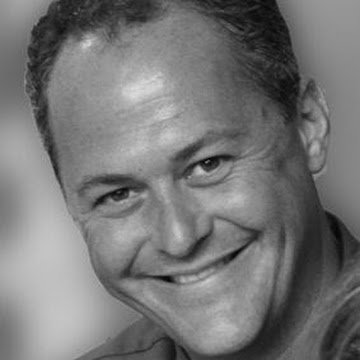
About the author
Author and van Gogh enthusiast
Lecturer on van Gogh since 2013, and author of The Van Gogh Prophecy.
Background
It began with one painting
Jared Baxter studied philosophy and classical humanities at Davidson College. Since 2013 he has lectured internationally on van Gogh, often as a featured or keynote speaker. His papers and articles on Rembrandt, Delacroix and van Gogh have been covered by outlets from The Huffington Post to The Wall Street Journal.
His work began with a simple question: what is the man in the middle of this painting doing? His answer, that Café Terrace at Night encodes a hidden Last Supper, drew international attention and helped spark a wider conversation about van Gogh’s Christian symbolism. He later spent six months following the painter’s footsteps, researching in Zundert, Nuenen, London, Amsterdam, Cuesmes, Antwerp, Paris, Arles, Saint-Rémy, Saintes-Maries and Auvers.
The Van Gogh Prophecy, his debut thriller, grows out of that research. He lives in the Pacific Northwest, where he continues to write and lecture on art and faith.
Lectures
- 2022, Paris. “Vincent van Gogh and the Allegory of the Road,” Paris Conference on Arts & Humanities
- 2021, Tokyo (online). Keynote: “The Roma Festival of the Black Madonna: Vincent van Gogh’s Symbolist Awakening,” Asian Conference on Arts & Humanities
- 2019, Brighton. Keynote: “Van Gogh’s Last Supper: Striking New Evidence,” European Conference on Arts & Humanities
- 2016, Brighton. Keynote: “Vincent van Gogh’s Symbolist Art”
- 2015, Osaka. Featured address: “The Power behind Starry Night: Vincent’s Empyrean Vision,” Asian Conference on Arts & Humanities
- 2014, Providence. “Rembrandt’s Slaughtered Ox: Vincent van Gogh’s Ideation of the Artist’s Plight and Destiny,” North American Conference on Arts & Humanities
- 2013, Brighton. “Van Gogh’s Last Supper: Decoding the Apotheosis in Symbolist Easter Eggs,” European Conference on Arts & Humanities
Publications
- Art History Supplement, January 2014
- Anistoriton Journal of History, Archaeology and Art History, July 2014